

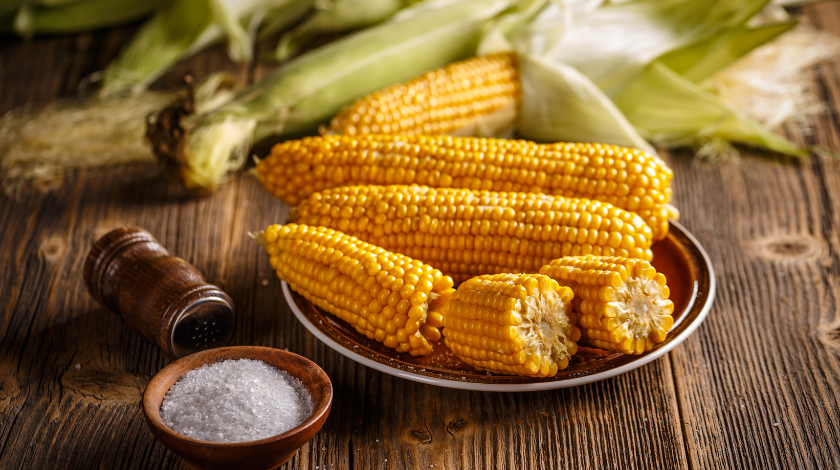
I remember visiting a relative’s farm a few years back during the corn harvest season. The fields were a beautiful, vibrant green, and the yield looked fantastic. But instead of joy, there was a palpable sense of anxiety. My relative was on the phone, haggling with a local trader who was offering a price so low it barely covered the cost of the seeds and fertilizer. He felt trapped. He had to sell; he didn’t have the storage, and he needed the money. This story, I later learned, is heartbreakingly common for thousands of corn farmers across the country. They work tirelessly, only to see their profits swallowed up by high costs and low selling prices.
But what if there was a way to change this story? What if farmers could band together, not just as neighbors, but as a unified business force? This is not a dream. This is the reality being created by FPOs, specifically for crops like corn. If you are a corn farmer or simply curious about the future of agriculture, understanding “FPO corn” could be the most important thing you do today. Let’s break it down in simple, clear language.
What is an FPO? Demystifying the Acronym for Farmers
FPO stands for Farmers Producer Organisation. At its heart, it is a legal entity formed by primary producers, which means farmers like you and me. Think of it as a company that is owned and run by farmers themselves. The main goal of an FPO is to improve the income and livelihood of its members by combining their strengths.
Imagine you are a single small fish in a vast ocean. You are at the mercy of the bigger currents and predators. Now, imagine if hundreds of small fish swam together in a giant, organized school. Suddenly, they have more power, can move in a chosen direction, and can protect themselves much better. An FPO is that school of fish. It is a collective. It is the idea that while one farmer might have limited bargaining power, one hundred or one thousand farmers together can command respect, negotiate better deals, and access opportunities that were previously impossible.
An FPO is formally registered under a specific law, like the Companies Act, and it operates on democratic principles. The farmers are the shareholders, and they elect a board of directors from among themselves to make key decisions. This structure ensures that the organization works for the benefit of the farmers, not for outside investors.
Read Also: Decoding 1.5F8-P1UZT: Your Guide to Understanding and Sourcing Obscure Part Numbers
The Specific Power of an FPO for Corn Growers
You might wonder, “Why do we need a special organization for corn? Can’t any FPO work?” While many FPOs are multi-crop, there is a powerful logic behind forming FPOs focused on specific crops like corn, also known as maize.
Corn farming has its own unique set of challenges. The input requirements for seeds and fertilizers are very specific. The market prices for corn can be highly volatile, changing from season to season and even month to month. Furthermore, corn requires efficient post-harvest handling and, if you want to get the best price, potential for value addition like processing into corn flour, animal feed, or popcorn.
A corn-specific FPO can hyper-focus on these areas. It can become an expert in the entire corn value chain, from sourcing the best hybrid seeds in bulk to building relationships with large buyers like starch industries, poultry feed manufacturers, and retail chains that need a consistent, high-quality supply of maize. This specialized focus makes the FPO incredibly efficient and effective for its corn-growing members.
Key Benefits of Joining a Corn FPO: More Than Just a Better Price
The advantages of being part of an FPO go far beyond just getting a slightly better price for your harvest. The benefits are multi-layered and touch every aspect of a farming business.
Slashing Costs with Bulk Input Purchase
One of the biggest immediate benefits is in the cost of inputs. When you farm alone, you buy seeds, fertilizers, pesticides, and even diesel in small quantities from the local dealer. You have little power to negotiate.
Now, picture your FPO collecting the input requirements from all 500 of its members. Suddenly, you are not buying 10 bags of fertilizer; you are buying 5000 bags. The FPO can then go directly to the major fertilizer company or a large wholesaler and negotiate a wholesale price. The savings can be substantial, sometimes 15% to 20% cheaper than the local market rate. This direct reduction in your cost of cultivation automatically increases your potential profit margin, even before you’ve sold a single corn cob.
Boosting Income with Collective Bargaining
This is the part that directly addresses the problem my relative faced. When individual farmers bring their small lots of corn to the local market (mandi), they are price-takers. They have to accept whatever price the traders are offering that day.
An FPO changes this dynamic completely. Instead of 100 farmers selling 100 small trucks of corn, the FPO aggregates the produce into a large, consistent supply. A single truckload of 100 tons is very different from 100 trucks of one ton each. The FPO can then bypass the local traders and negotiate directly with large, bulk buyers. These could be food processing companies, export agents, or large retail chains. These buyers are often willing to pay a premium for a large, assured, and quality-checked supply. This collective bargaining power is the key to breaking free from the cycle of low prices.
Unlocking Knowledge and Financial Support
Farming today is not just about sowing and harvesting; it’s a science. An FPO acts as a channel for knowledge. It can organize training sessions on the best practices for corn cultivation, soil health management, and water conservation. It can bring in agricultural scientists to advise members on new, high-yield seed varieties.
Furthermore, access to credit is a perennial issue for small farmers. Banks are often hesitant to give loans to individual smallholders. However, they are much more willing to lend to a registered, formal entity like an FPO. The FPO can then get loans for building shared infrastructure like storage warehouses, processing units, or even to provide timely credit to its members for the upcoming season. The Government of India also has specific schemes providing financial support for FPOs, making it easier for them to get started and scale up.
How a Corn FPO Actually Works: A Step-by-Step Walkthrough
Let’s make this practical. How does the process actually unfold from ground level? Here is a simplified walkthrough.
-
Formation and Membership: A group of progressive farmers, often with the help of a promoting institution like an NGO or a government agency, comes together to form the FPO. They register it legally and farmers in the area are invited to become members by buying a share, which is usually very affordable.
-
Planning and Procurement: Before the sowing season, the FPO surveys its members to understand their input needs. It then uses its collective fund to place a large order for seeds, fertilizers, etc., at a discounted rate, and distributes them to the members.
-
Production Support: During the growing season, the FPO provides extension services, perhaps through an appointed agronomist, who visits farms and advises members on pest control, irrigation, and other issues.
-
Aggregation and Post-Harvest Management: After harvest, instead of going to the market, members bring their produce to a common collection center managed by the FPO. Here, the corn is cleaned, graded, and aggregated. This is a crucial step for ensuring quality and getting a better price.
-
Marketing and Sales: The FPO’s marketing team, which could be a few elected members, then contacts potential buyers. They might even conduct a small auction or enter into a forward contract where the price is decided before the harvest. The revenue from the sale is collected by the FPO.
-
Profit Distribution: After deducting the operational costs (which are minimal), the FPO distributes the majority of the sale proceeds back to the farmers. Because the selling price was higher and the input cost was lower, the farmer’s net income is significantly better.
It’s Not All Easy: A Look at the Challenges
It would be unfair to paint an overly rosy picture. Starting and running a successful FPO is challenging. The initial hurdle is often building trust among farmers who are used to working independently. There can be skepticism about the intentions of the leaders.
Managing the finances and operations of an FPO requires some basic professionalism. Keeping transparent accounts is non-negotiable. There is also the constant challenge of finding the right market and negotiating the best deal, which requires skill and connections. However, the government and various agencies provide hand-holding support for the first few years to help FPOs overcome these initial challenges. The key is to start with a core group of committed and trustworthy farmers who are willing to work for the collective good.
How to Find and Join a Corn FPO in Your Area
If you are convinced and want to be part of an FPO, here is how you can start looking.
-
Ask Your Local Agriculture Department: The state government’s agriculture office is often the best source of information. They usually have a list of registered FPOs in the district.
-
Check with Farmer Facilitation Centers: These centers are set up to help farmers with various services and often have information on FPOs.
-
Online Portals: The Government of India has launched platforms like the SFAC (Small Farmers’ Agribusiness Consortium) website which provides information on FPOs across the country.
-
Network with Other Farmers: Talk to the more progressive farmers in your village or neighboring villages. Word of mouth is still a very powerful tool in rural communities.
When you find one, ask questions. Understand their membership fees, their past performance, how they market their produce, and how transparent their accounting is. Attend a meeting if possible. It is your right as a potential member to be fully informed.
Conclusion
The story of the lonely corn farmer struggling against an unfair system does not have to be the only story. The model of FPO corn offers a powerful, practical, and proven alternative. It is about replacing isolation with community, and weakness with strength. It is about transforming farmers from being mere producers into being savvy business owners who have control over their costs, their prices, and ultimately, their destinies. The journey requires cooperation and effort, but the reward is a more sustainable, profitable, and dignified life in agriculture. The first step is simply believing that together, we are stronger.
Frequently Asked Questions (FAQ)
1. What is the full form of FPO?
FPO stands for Farmers Producer Organisation. It is a collective of farmers who come together to form a legal entity to improve their bargaining power and income.
2. Is there a difference between FPO and cooperative?
Yes, there are subtle differences. While both are collectives, FPOs are typically registered under the Companies Act and are often more business-oriented and professionally managed. Cooperatives are older structures registered under Cooperative Societies Acts. FPOs are designed to be more agile and market-focused.
3. How much does it cost to join an FPO?
The cost is usually very low to ensure all farmers can participate. It often involves buying one or two shares of the company, which could be as low as a few hundred rupees. The exact amount is decided by the members of the FPO.
4. Can I leave the FPO if I am not happy?
Yes, typically you can. The process for exiting will be outlined in the FPO’s bylaws. Usually, you can sell your share back to the FPO or to another eligible farmer.
5. What if the FPO fails to get a good price for my corn?
This is a common concern. A well-run FPO will often have a pre-decided minimum guaranteed price for members. If the market price is too low, the FPO might use its collective storage facility to hold the produce until prices improve, something an individual farmer could never do. Transparency in sales is key, so members should always know what price was negotiated and why.


