

Have you ever been absolutely, one hundred percent certain of something, only to find out you were completely wrong? I am not talking about a simple mistake, like forgetting where you put your keys. I am talking about a deep, unshakable memory that feels as real as the ground beneath your feet. Now, imagine that thousands of other people share that exact same wrong memory with you. That is the bizarre and fascinating world of the Mandela Effect, and one of its most charming examples revolves around a children’s television show from the late 1990s: Flub Teletubbies.
If you are a child of the 90s or had younger siblings who were, you probably spent some time in the whimsical, rolling hills of Teletubby Land. You remember the four colorful creatures, the giggling baby sun, and the strange, robotic voices. But for a surprising number of people, there is a fifth member of the family. A Teletubby that does not show up on any official merchandise, in any episode, or in any credits. Its name is Flub.
I first encountered “Flub” in a online forum. Someone had posted, “Does anyone else remember a green Teletubby named Flub?” The response was overwhelming. Dozens of comments poured in, not just agreeing, but adding details. “Yes! He was the shy one!” “He had a spiral antenna!” “I had a talking toy of him!” The conviction was palpable. And yet, a quick search through the show’s history revealed a stark truth: Flub never existed. This article is our journey to understand why. We will meet the real Teletubbies, delve into the description of this spectral fifth member, and use the lens of psychology to uncover how a whole generation can collectively remember something that was never there.
The One and Only Four: Meeting the Real Teletubbies
Before we can investigate the ghost, we need to be sure of the living. The television show Teletubbies, created by the BBC, was designed for a very young audience. It featured four, and only four, characters. Let us take a moment to properly reintroduce them, because I believe much of the “Flub” confusion starts with a simple mix-up among these original four.
Tinky Winky was the first. He is the largest Teletubby and is a striking purple color. On his head, he has a simple, straight, triangle-shaped antenna. He carries a red magic bag. People often describe Tinky Winky as the gentle, caring one of the group, sometimes seen pushing the Tubby Bye-Bye cart. His signature color and triangular antenna are his key identifiers.
Dipsy is the second Teletubby. He is green, and this is very important for our Flub mystery. Dipsy has a straight, dipstick-like antenna on his head. He often wears a cow-print pattern on his hat, which adds to his unique look. Dipsy is frequently characterized as the most stubborn and “cool” of the Teletubbies, marching to the beat of his own drum.
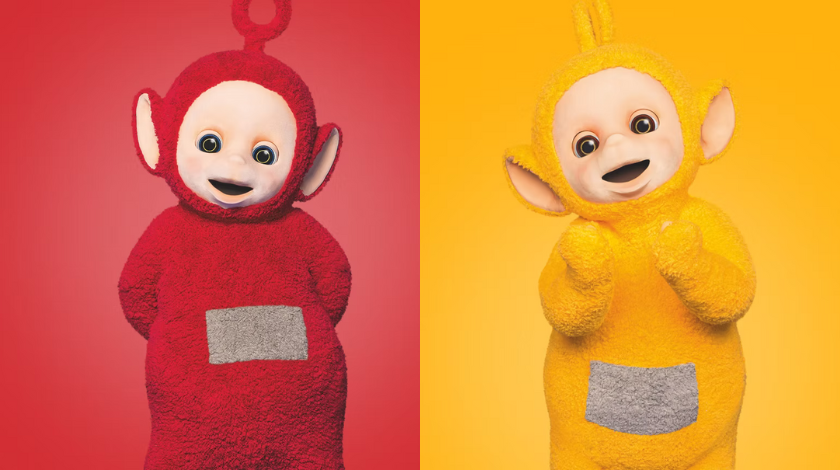
Laa-Laa is the third member. She is a bright, sunny yellow and is the most energetic and musical of the group. Her antenna is a cute, curly spring that bounces as she moves. Laa-Laa loves her big, orange ball and is often seen singing and dancing, representing a playful and joyful spirit.
Po is the fourth and final Teletubby. She is red and, crucially, is the smallest of the group. Her antenna is a perfect circle, like a little hoop. Po rides a scooter and is known for being a bit cheeky and mischievous. She speaks a few words of Mandarin Chinese, adding to her distinct identity.
This is the complete set. Four characters, each with a unique color, antenna shape, and personality trait. There was no secret fifth character introduced in special episodes or regional variations. The core cast was always and only these four. So, where did Flub come from?
Read Also: Thinking Outside the Box: Your Quirky and Practical Guide to Buying a Personal hearse for sale
The Phantom Fifth: Who and What is “Flub”?
Flub is a creature of collective imagination. While descriptions can vary, a consensus has emerged online about what this non-existent Teletubby supposedly looked like and how it acted. By piecing together these shared memories, we can build a profile of this pop culture phantom.
The most common description paints Flub as a light green or lime-green Teletubby. This is a critical detail. Many people remember Flub being a different shade of green than Dipsy, perhaps lighter or more vibrant. Others recall Flub having a unique antenna shape, often described as a spiral or a curly cue, distinct from Laa-Laa’s spring and Po’s hoop.
In terms of personality, the memories get even more interesting. Flub is often characterized as the “shy” or “clumsy” one. People have a vague recollection of Flub being a bit of an outsider, maybe tripping over its own feet or hiding behind the others. Some even attribute a specific sound or word to Flub, like a soft “flub-a-dub” noise. There is a pervasive feeling that Flub was less prominent than the others, perhaps only appearing in a few episodes, which would explain why its memory is so faint.
I have a theory about this personality trait. When we misremember something, our brains do not just leave a blank space. They actively fill in the gaps with logical information. If you believe there was a fifth Teletubby that you cannot clearly picture, your brain might assign it a trait like “shyness” to explain why it was not at the forefront of your memory. It is a post-hoc justification our minds create to make the false memory feel more coherent.
The Mandela Effect: When Millions Remember Wrong
The term “Mandela Effect” was coined by paranormal researcher Fiona Broome in 2009. She discovered that she, along with thousands of others, vividly remembered the South African leader Nelson Mandela dying in prison during the 1980s. In reality, Mandela was released in 1990 and passed away in 2013. This shared, detailed, and incorrect memory of a major historical event was so widespread that it needed a name.
The Flub Teletubbies phenomenon is a textbook example of the Mandela Effect. It is not just one or two people misremembering; it is a large group of people who share an identical, specific, and factually incorrect memory. Other famous examples include:
-
The Berenstain Bears: Many people insist the children’s book series was called “The Berenstein Bears.”
-
“Luke, I am your father”: The actual line from Star Wars: The Empire Strikes Back is, “No, I am your father.”
-
The Monopoly Man’s Monocle: The character from the Monopoly board game does not have a monocle, though most people vividly remember one.
-
“Mirror, mirror on the wall”: The Queen in Disney’s Snow White actually says, “Magic mirror on the wall.”
These are not simple spelling mistakes or forgotten lines. They are strong, visual memories that feel real to those who have them. The Flub Teletubbies fits right in. It is a small, personal Mandela Effect from our childhoods, but it is no less powerful for those who experience it.
Unraveling the Mystery: Why Your Brain Creates “Flub”
So, how does this happen? How can so many people independently create the same imaginary character? The answer lies not in parallel universes or glitches in reality, but in the fascinating and fallible workings of the human brain. Our memories are not like video recordings, stored perfectly and played back accurately. They are more like stories we tell ourselves, and each time we recall them, we can accidentally change the details.
Let us break down the most likely psychological reasons for the Flub phenomenon.
1. Confusion with the Real Teletubbies (Most Likely Explanation):
This is the simplest and most probable cause. The real Teletubbies are a set of brightly colored, non-human characters with similar shapes and silly names. It is incredibly easy to get them mixed up, especially when you are recalling them from a distant childhood memory.
The primary suspect in the Flub case is Po, the red Teletubby. Think about it. “Po” is a very short, unusual name. “Flub” is also a short, unusual, similar-sounding nonsense word. Our brains, when trying to retrieve a fuzzy memory, often grab onto a similar-sounding word. It is very plausible that people heard “Po,” their brain mis-filed it as “Flub,” and the false memory was born. Furthermore, Po is the smallest, which could be misconstrued as being “younger” or “shyer,” traits often assigned to Flub.
Another candidate is Dipsy, the green Teletubby. Some people might be remembering Dipsy but associating the name “Flub” with him, perhaps due to a conversation with another child or a misheard line of dialogue. The human mind hates a vacuum, so it will create a name and identity to match a fuzzy visual memory of a green, alien-like creature.
2. The Power of Suggestion and Social Reinforcement:
Once the idea of “Flub” was introduced online, it spread like wildfire. Someone posts, “I remember Flub!” Another person reads it and thinks, “That sounds familiar… maybe I remember that too!” This is called the power of suggestion. Their brain starts to search for any scrap of a memory that could fit the description. Vague childhood impressions are reshaped to match the new information. As more and more people agree, it creates social proof, making the memory feel even more valid. “It can’t be wrong if all these people remember it too!”
3. Pattern Recognition and Completeness:
Human brains are wired to see patterns and complete sets. We like things to be neat and symmetrical. Four can feel like an incomplete number for a group of cute, collectible characters, especially in an era of five-member Power Ranger teams and other quintets. A subconscious desire for a “fifth” member, perhaps to match the five fingers on a hand, could lead the brain to invent one to make the set feel complete. A fifth Teletubby just feels right, so our memory obliges and creates one.
A Personal Reflection on Faulty Memories
I will be perfectly honest with you. When I first started researching this, I was a pure skeptic. I watched Teletubbies with my younger cousin, and I was certain there were only four. But the sheer volume of people swearing by Flub made me pause. It even made me doubt myself for a moment. Did I forget one? I spent a good hour scrolling through images and episode guides, half-expecting to find a screenshot of a green, spiral-antennad Teletubby I had somehow missed.
This experience taught me a valuable lesson about humility and the nature of memory. We all trust our own memories implicitly. They form the foundation of our personal history. But the Flub phenomenon shows us that our memories are collaborative, malleable, and sometimes outright fictional. It is not a sign of a weak mind; it is a sign of a normal, human one. Our brains are built for survival and quick thinking, not for perfect, archival storage. Embracing the idea that our past is not a perfect recording can be unsettling, but it is also a gateway to being more understanding when others remember things differently.
Conclusion: Flub, the Teletubby That Lives in Us
In the end, Flub is more than just a mistaken memory. It is a cultural artifact born from our shared childhood experiences and the quirky mechanics of the human brain. While Flub never danced on the sunny hills of Teletubby Land, it has found a vibrant life in the collective consciousness of the internet. It is a testament to the power of nostalgia and a fascinating case study in how our minds work.
The next time you get into a debate with a friend about a line from a movie or the color of a cartoon character’s shirt, remember Flub the Teletubby. It is a humble reminder that our perception of reality is a fragile, personal, and often shared construction. The truth is that there were only four Teletubbies. But the enduring legend of Flub shows that sometimes, what we choose to remember together can be just as powerful as what was actually there.
Frequently Asked Questions (FAQ)
Q1: Is there any chance Flub was a real Teletubby in a different country?
A1: No, extensive research into international broadcasts and variations of the show has confirmed that the core cast of four Teletubbies was consistent worldwide. There were no regional fifth characters.
Q2: Could Flub have been a one-off guest character or from a special?
A2: There is no evidence of this. All episodes, including specials and the more recent reboot, strictly feature only Tinky Winky, Dipsy, Laa-Laa, and Po. The show’s creators have never acknowledged or introduced a character named Flub.
Q3: I had a toy of Flub! How do you explain that?
A3: This is a very common and powerful memory. However, no official Teletubbies toy line ever included a Flub character. It is possible that the memory is a combination of factors: you might have had a toy of Dipsy or Po but called it “Flub” as a child. Alternatively, you could be thinking of a toy from a different, similar-looking show or a generic, non-licensed plush that your imagination assigned to the Teletubbies universe.
Q4: What is the difference between the Mandela Effect and just being wrong?
A4: The key difference is scale and specificity. Being wrong is personal, like forgetting an appointment. The Mandela Effect is a shared false memory experienced by a large group of people who all misremember the same specific detail in the same way. It is the collective, identical nature of the error that makes it a Mandela Effect.
Q5: Are there other Mandela Effects related to 90s kids’ shows?
A5: Absolutely. Another common one is the belief that the cartoon dog Scooby-Doo had a blue collar. In fact, his collar has always been brown. Others misremember details from shows like Pokémon and Sailor Moon, often related to character colors or famous quotes.


